By: Khalid Ahmadzai
Four years ago, the world watched Kabul fall. The images remain seared in our collective memory: families in despair, people running after planes, children lifted over barbed wire at Hamid Karzai International Airport. They were not just snapshots of chaos. They revealed the collapse of a republic and the shattering of countless dreams.
Much of what Afghans feared in those moments has since become reality. Daily life inside Afghanistan has grown harsher, with basic necessities scarce and fundamental rights stripped away. Humanitarian aid agencies, once a fragile lifeline, have been drastically reduced after the elimination of USAID programs.
And then, as if the suffering were not already immense, another blow came. Just last night, a devastating earthquake struck. Hundreds of lives have been lost.
I remember August 2021 vividly. At the time, there were only seven of us Afghan immigrants living in Northwest Arkansas. We gathered nearly every week of that summer to share stories and meals, drink chai, listen to music, and try to comfort one another while watching Afghanistan unravel. When Kabul fell on August 15, so too did the republic, and with it, the fragile hopes of a nation.
In the two weeks that followed, the United States carried out the largest evacuation in its history. More than 120,000 Afghans were airlifted to safety. Each carried a story, a struggle, and a fragile hope for the future. Since then, more than 270 Afghans have arrived in Northwest Arkansas to begin again.
The challenges were immense: learning English, obtaining driver’s licenses, navigating complicated systems, and starting life over with nothing. Yet what stands out most in these past four years is resilience. Families have rebuilt their lives while continuing to support loved ones still in danger back in Afghanistan. Some have opened small businesses, entered corporate America, or stepped into professional careers. Others keep our supply chains, hotels, and poultry plants running. Many have joined the gig economy to make ends meet. A few have even become quiet ambassadors, encouraging friends and relatives from across the United States to move here. Against all odds, Arkansas has become home.
And the children give me the greatest hope. Today, sixteen Afghan girls are enrolled in middle and high schools across Northwest Arkansas. Unlike their peers in Afghanistan, they walk into classrooms without fear. Three more have already graduated and are now pursuing college degrees. That single difference, the freedom to study, will shape not only their lives but generations to come.
I cannot pretend I am not angry about how the withdrawal was handled. It was chaotic. It was careless. And its consequences will echo for decades. But I also cannot ignore another truth: the way communities opened their arms. Here in Northwest Arkansas, I saw it firsthand. From Bentonville to Prairie Grove, neighbors showed up. Strangers became sponsors, and sponsors became friends, lifelong friends who share meals, celebrate milestones, and walk alongside families through every hardship and joy.
This, ultimately, is the lesson I carry. The best response to despair is not more despair. It is commitment. Commitment to justice. Commitment to compassion. Commitment to hope. Commitment to welcome.
I am deeply thankful for our community here in Northwest Arkansas. You have shown up. You have stepped into the work of hospitality and welcome, and in doing so, you have made this place feel like home.
About the Author
Khalid Ahmadzai has been part of Canopy Northwest Arkansas since its inception in 2016. He currently serves as Senior Director of Partnerships, focusing on building community connections.
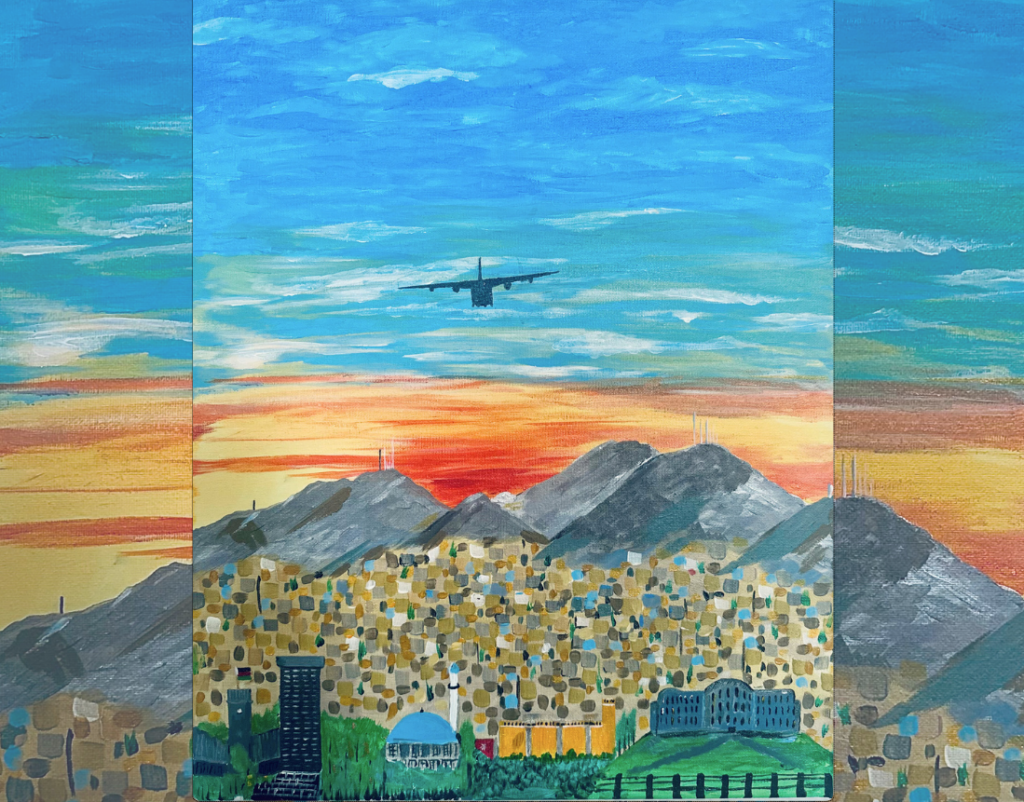
As an Afghan immigrant I am deeply thankful of the community supported us as welcomed us well as Canopy!